Descriere YEO:
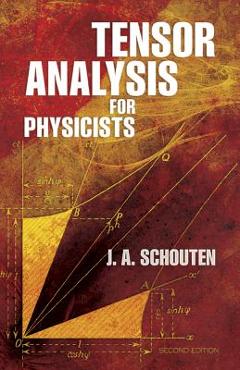
Pe YEO găsești Tensor Analysis for Physicists, Second de la J.A. Schouten, în categoria Mathematics.
Indiferent de nevoile tale, Tensor Analysis for Physicists, Second Edition - J. A. Schouten din categoria Mathematics îți poate aduce un echilibru perfect între calitate și preț, cu avantaje practice și moderne.
Preț: 98.95 Lei
Caracteristicile produsului Tensor Analysis for Physicists, Second
- Brand: J.A. Schouten
- Categoria: Mathematics
- Magazin: libris.ro
- Ultima actualizare: 22-04-2026 00:26:07
Comandă Tensor Analysis for Physicists, Second Online, Simplu și Rapid
Prin intermediul platformei YEO, poți comanda Tensor Analysis for Physicists, Second de la libris.ro rapid și în siguranță. Bucură-te de o experiență de cumpărături online optimizată și descoperă cele mai bune oferte actualizate constant.
Descriere magazin:
n nThis brilliant study by a famed mathematical scholar and former professor of mathematics at the University of Amsterdam integrates a concise exposition of the mathematical basis of tensor analysis with admirably chosen physical examples of the theory. nThe first five chapters incisively set out the mathematical theory underlying the use of tensors. The tensor algebra in EN and RN is developed in Chapters I and II. Chapter II introduces a sub-group of the affine group, then deals with the identification of quantities in EN. The tensor analysis in XN is developed in Chapter IV. In chapters VI through IX, Professor
Schouten presents applications of the theory that are both intrinsically interesting and good examples of the use and advantages of the calculus. Chapter VI, intimately connected with Chapter III, shows that the dimensions of physical quantities depend upon the choice of the underlying group, and that tensor calculus is the best instrument for dealing with the properties of anisotropic media. In Chapter VII, modern tensor calculus is applied to some old and some modern problems of elasticity and piezo-electricity. Chapter VIII presents examples concerning anholonomic systems and the homogeneous treatment of the equations of Lagrange and Hamilton. Chapter IX deals first with relativistic kinematics and dynamics, then offers an exposition of modern treatment of relativistic hydrodynamics. Chapter X introduces Dirac\'s matrix calculus. Two especially valuable features of the book are the exercises at the end of each chapter, and a summary of the mathematical theory contained in the first five chapters -- ideal for readers whose primary interest is in physics rather than mathematics.n